Join This Website (Click on Follow)

Showing posts with label Spectroscopy and Structure Elucidation. Show all posts

Friday, February 11, 2011

High Resolution NMR: Theory and Chemical Applications, 3rd Edition


High Resolution NMR provides a broad treatment of the principles and theory of nuclear magnetic resonance (NMR) as it is used in the chemical sciences. It is written at an "intermediate" level, with mathematics used to augment, rather than replace, clear verbal descriptions of the phenomena. The book is intended to allow a graduate student, advanced undergraduate, or researcher to understand NMR at a fundamental level, and to see illustrations of the applications of NMR to the determination of the structure of small organic molecules and macromolecules, including proteins. Emphasis is on the study of NMR in liquids, but the treatment also includes high resolution NMR in the solid state and the principles of NMR imaging and localized spectroscopy.
Careful attention is given to developing and interrelating four approaches - steady state energy levels, the rotating vector picture, the density matrix, and the product operator formalism. The presentation is based on the assumption that the reader has an acquaintance with the general principles of quantum mechanics, but no extensive background in quantum theory or proficiency in mathematics is required. Likewise, no previous background in NMR is assumed, since the book begins with a description of the basic physics, together with a brief account of the historical development of the field.
This third edition of High Resolution NMR preserves the "conversational" approach of the previous editions that has been well accepted as a teaching tool. However, more than half the material is new, and the remainder has been revised extensively. Problems are included to reinforce concepts in the book.

Key Features

* Uses mathematics to augment, not replace, verbal explanations
* Written in a clear and conversational style
* Follows the successful format and approach of two previous editions
* Revised and updated extensively--about 70 percent of the text is new
* Includes problems and references to additional reading at the end of each chapter

Read more...

NMR Spectroscopy in Pharmaceutical Analysis


For almost a decade, quantitative NMR spectroscopy (qNMR) has been established as valuable tool in drug analysis. In all disciplines, i. e. drug identification, impurity profiling and assay, qNMR can be utilized.
Separation techniques such as high performance liquid chromatography, gas chromatography, super fluid chromatography and capillary electrophoresis techniques, govern the purity evaluation of drugs. However, these techniques are not always able to solve the analytical problems often resulting in insufficient methods. Nevertheless such methods find their way into international pharmacopoeias. Thus, the aim of the book is to describe the possibilities of qNMR in pharmaceutical analysis.
Beside the introduction to the physical fundamentals and techniques the principles of the application in drug analysis are described: quality evaluation of drugs, polymer characterization, natural products and corresponding reference compounds, metabolism, and solid phase NMR spectroscopy for the characterization drug substances, e.g. the water content, polymorphism, and drug formulations, e.g. tablets, powders. This part is accompanied by more special chapters dealing with representative examples. They give more detailed information by means of concrete examples. combines theory, techniques, and concrete applicationsall of which closely resemble the laboratory experience considers international pharmacopoeias, addressing the concern for licensing features the work of academics and researchers, appealing to a broad readership.


Read more...

Methods for Structure Elucidation by High-Resolution NMR


Nuclear Magnetic Resonance Spectroscopy (NMR) is now widely regarded as having evolved into a subscience. The field has become immensely diverse, ranging from medical use through solid state NMR to liquid state applications, with countless books and scientific journals devoted to these topics. Theoretical as well as experimental advance continues to be rapid, and has in fact accelerated by many novel innovations. This multi-authored book focuses on the latest developments in the rapidly evolving field of high resolution NMR, specifically with a view to applications on the structure elucidation of organic molecules of moderate molecular weight. Conceptually it differs from basic educational texts, hard-core scientific papers and regular review articles in that each chapter may be regarded as the authors' personal account of their special insights and results that crystallised after several years of research into a given topic. The book revolves around several themes and offers a handful of scientific "gems" of various colors, reflecting the great diversity of NMR. It contains 16 loosely connected chapters written by some of today's most accomplished NMR scientists in the world. Each chapter is a unique synthesis of the authors' previous research results in the given field, and thus projects special insights. Much emphasis has been given to the latest developments in NMR, in particular to selective pulses and pulsed field gradients. As a part of the series "Analytical Spectroscopy Library", with subsequent editions coming along this book should provide a platform for future research accounts of similar flavor. The material is presented in a mostly non-mathematical fashion, and is intended mainly for chemists, application NMR scientists and students with already some background in NMR. Some of the chapters slightly overlap in the discussed topics, which is particularly exciting in terms of gaining insight into the same area from different angles.


Read more...

Structure Elucidation by NMR in Organic Chemistry

Structure Elucidation by NMR 
in Organic Chemistry: A Practical Guide by Eberhard Breitmaier

amazone review


Structure Elucidation by NMR in Organic Chemistry
Publisher: Wiley | 3 edition (December 3, 2002) | ISBN: 0470850078 | Pages: 270 | PDF | 8.7 MB

This text provides the graduate student with a systematic guide to unravelling structural information from the NMR spectra of unknown synthetic and natural compounds. A brief introduction gives an overview of the basic principles and elementary instrumental methods of NMR. This is followed by instructional strategy and tactical advice on how to translate spectra into meaningful structural information. The book provides the student with 55 sets of spectra of graduated complexity. These are designed to challenge the student's problem-solving abilities by the introduction of new concepts with each group of problems, followed by possible solutions and full explanations. A formula index of solutions is provided at the end of the text. This third edition, following on from the second (a reprint of the first edition with corrections), presents significant new material. Thus, actual methods of two-dimensional NMR such as some inverse techniques of heteronuclear shift correlation, as well as the detection of proton-proton connectivities and nuclear Overhauser effects are included. To demonstrate the applications of these methods, new problems have replaced those of previous editions.

download


alternative link

Read more...

Saturday, January 22, 2011

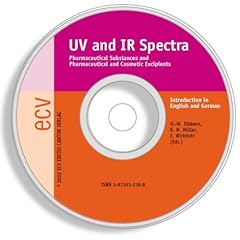
UV and IR Spectra: Pharmaceutical Substances (UV and IR) and Pharmaceutical and Cosmetic Excipients (IR)


This CD-ROM with its 1,673 spectra provides various working options. The general functions are identical with those of Acrobat Reader. For detailed information please refer to Reader Help under the menu Help. Under Further information you will find details about the publication and the publishing company, license conditions and indications concerning the publisher's products. Preface, Further information, Functions of the CD, and Introductions are available both in English and German, and so is the Spectrocognosia. All other documents of the collection of spectra are in English.

The collection of spectra is divided into two major groups: pharmaceutical substances (including indications) and excipients. You can highlight texts or single graphs and copy them for further use in other applications. You can also print whole sheets.

In the Specfinder table you can search for UV absorption maximum values. This is possible by entering the particular figure + nm (without blank; e. g. 348nm) in the search function of Acrobat Reader. The found spectrum can be called up by clicking on the respective spectrum number. (See the Introduction for more detailed information.)

The section Further tables contains documents for "pharmaceutical substances showing a well distinct UV spectrum in alkaline solution or being unsoluble in methanol", "pharmaceutical substances showing no distinct maximum of absorption", and "pharmaceutical substances without useful UV absorption > 220 nm". There you can only search, a link is not available.

The display of the spectra sheets or other documents on the screen depends both on the components of your PC and the settings of Acrobat Reader. Magnification resp. diminution is possible using the functions of this application.


Read more...

Monday, January 17, 2011

Fluorescence Spectroscopy by Joseph R. Lakowicz


[prin.jpg]


Principles of Fluorescence Spectroscopy by Joseph R. Lakowicz (Author)
Publisher: Springer; 2 edition (June 30, 1999) | ISBN-10: 0306460939 | DjVu | 16 Mb | 725 pages

In the second edition of Principles I have attempted to maintain the emphasis on basics, while updating the examples to include more recent results from the literature. There is a new chapter providing an overview of extrinisic fluorophores. The discussion of timeresolved measurements has been expanded to two chapters. Quenching has also been expanded in two chapters. Energy transfer and anisotropy have each been expanded to three chapters. There is also a new chapter on fluorescence sensing. To enhance the usefulness of this book as a textbook, most chapters are followed by a set of problems. Sections which describe advanced topics are indicated as such, to allow these sections to be skipped in an introduction course. Glossaries are provided for commonly used acronyms and mathematical symbols. For those wanting additional informtion, the final appendix contains a list of recommended books which expand on various specialized topics.'

Read more...

Spectroscopy of Pharmaceutical Solids (Drugs and the Pharmaceutical Sciences)


Selecting illustrative examples from the recent literature, this reference studies the underlying principles and physics of a wide range of spectroscopic techniques utilized in the pharmaceutical sciences and demonstrates various applications for each method analyzed in the text-showing how knowledge of the mechanisms of spectroscopic phenomena may facilitate more advanced technologies in the field.

Read more...

Mass Spectrometry of Proteins and Peptides (Methods in Molecular Biology, volume 146)


John R. Chapman recreates the success of his earlier acclaimed book (Protein and Peptide Analysis by Mass Spectrometry, 1996) with a major new collection of cutting-edge methods in the analysis of proteins and peptides. Contributed by well-established investigators, each chapter provides background information before guiding the researcher step-by-step through the experimental process, with detailed instructions to help assure experimental success. The applications covered range widely and include protein sequencing, higher-order structure determination, epitope mapping, kinetics, quantitation, glycosylation analysis, and bacterial typing. Authoritative and eminently practical, Mass Spectrometry of Proteins and Peptides demonstrates the full scope of this versatile analytical technique. All protein chemists and biochemists, as well as bioanalytical scientists, who want to exploit these powerful methods in their work, will find this book indispensable.

Read more...

Pharmaceutical and Medical Applications of Near-Infrared Spectroscopy (Practical Spectroscopy)


This book discusses the theory, instrumentation, validation, and implementation of near-infrared spectroscopy for pharmaceutical and medical applications. It showcases a diverse range of contemporary methods for the production, screening, and analysis of new drug products and pharmaceuticals. Presents current approaches in near-infrared spectroscopy (NIR) to monitor and control multiple phases of the drug manufacturing process.

Read more...

Mass Spectrometry and Genomic Analysis


The human genome project is set to revolutionise health care and medicine in the near future. The genetic make up of each individual gives clues as to the genetic factors that predispose one to a particular genetic disease. Single Nucleotide Polymorphisms (SNPs), single base changes in the nucleotide DNA sequence of individuals, are thought to be the main cause of genetic variation. By comparing patterns of SNP allele frequencies between disease affected and control populations, disease associated SNPs can be identified and potential disease gene(s) located. These types of study necessitate genotyping of thousands of SNPs which requires the use of powerful, high throughput, systems of analysis. Mass spectrometry is fast becoming the preferred technology for this type of high throughput analysis.

This book contains a collection of descriptions of some of the most outstanding advances in the field of mass spectrometry from which, I hope, the reader will be able to learn both the principles and the most up to date methods for its use in genomic analysis. It covers the general principles of the technologies and more in depth detailed descriptions for more academic reading and information.

Audience: Whether you are a student, a post-doctoral researcher or experienced MS user, this book will be a stimulating addition to the analytical arena of mass spectrometry and genomic analysis.

Read more...

Solving Problems with NMR Spectroscopy


Solving Problems with NMR Spectroscopy presents the basic principles and applications of NMR spectroscopy with only as much math as is necessary. It shows how to solve chemical structures with NMR by giving clear examples and solutions. This text will enable organic chemistry students to choose the most appropriate NMR techniques to solve specific structures. The problems to work and the discussion of their solutions and interpretations will help readers becomeproficient in the application of important, modern 1D and 2D NMR techniques to structural studies.

Key Features
* Presents the most important NMR techniques for structural determinations
* Offers a unique problem-solving approach
* Uses questions and problems, including discussions of their solutions and interpretations, to help readers grasp NMR
* Avoids extensive mathematical formulas
* Forewords by Nobel Prize winner Richard R. Ernst and Lloyd M. Jackman

Read more...

High Resolution NMR: Theory and Chemical Applications, 3rd Edition


High Resolution NMR provides a broad treatment of the principles and theory of nuclear magnetic resonance (NMR) as it is used in the chemical sciences. It is written at an "intermediate" level, with mathematics used to augment, rather than replace, clear verbal descriptions of the phenomena. The book is intended to allow a graduate student, advanced undergraduate, or researcher to understand NMR at a fundamental level, and to see illustrations of the applications of NMR to the determination of the structure of small organic molecules and macromolecules, including proteins. Emphasis is on the study of NMR in liquids, but the treatment also includes high resolution NMR in the solid state and the principles of NMR imaging and localized spectroscopy.
Careful attention is given to developing and interrelating four approaches - steady state energy levels, the rotating vector picture, the density matrix, and the product operator formalism. The presentation is based on the assumption that the reader has an acquaintance with the general principles of quantum mechanics, but no extensive background in quantum theory or proficiency in mathematics is required. Likewise, no previous background in NMR is assumed, since the book begins with a description of the basic physics, together with a brief account of the historical development of the field.
This third edition of High Resolution NMR preserves the "conversational" approach of the previous editions that has been well accepted as a teaching tool. However, more than half the material is new, and the remainder has been revised extensively. Problems are included to reinforce concepts in the book.

Key Features

* Uses mathematics to augment, not replace, verbal explanations
* Written in a clear and conversational style
* Follows the successful format and approach of two previous editions
* Revised and updated extensively--about 70 percent of the text is new
* Includes problems and references to additional reading at the end of each chapter

Read more...

NMR-MRI, µSR and Mössbauer Spectroscopies in Molecular Magnets


In the last years, after the discovery of molecular nanomagnets showing novel quantum effects, a renewed interest for the study of molecular magnetism and multifunctional molecular materials has emerged. These materials have triggered an intense research activity also in view of their possible applicabilities as, for example, as nanosized information storage units and as magnetic nanoparticles for bio-medicine. Several fundamental aspects of the microscopic static and dynamic properties of these molecular materials have been obtained by means of spectroscopies using local probes, as nuclei and muons.
In this book an extensive overview on the results obtained during the last decade and on recent achievements in the study of molecular magnets by means of Nuclear Magnetic Resonance, Muon Spin Rotation, Magnetic Resonance Imaging and Mossbauer techniques is presented. The aim is to introduce the reader to these techniques and to give a general background on their application to molecular spin systems.

Read more...

Carbon-13 NMR Spectroscopy: High-Resolution Methods and Applications in Organic Chemistry and Biochemistry


Read more...

Acceleration and Improvement of Protein Identification by Mass Spectrometry


At present where protein identification and characterisation using mass spectrometry is a method of choice, this book is presenting a review of basic proteomic techniques. The second part of the book is related to the novel high throughput protein identification technique called the 'molecular scanner'.

Several protein identification techniques are described, especially thepeptide mass fingerprint with MALDI-MS based method. E.g. ionisation process, matrix available, signal reproducibility and suppression effect, as well as date treatment for protein identification using bioinformatics tools.

Read more...

Inorganic Mass Spectrometry: Fundamentals and Applications (Practical Spectroscopy, 23)


Providing a theoretical background for inorganic mass spectrometry, this text describes classical applications of four modern mass spectrometers - magnetic sector, quadrupole, time-of-flight, and ion trap - and illustrates how they have impacted elemental and isotopic analysis. The book features examples that concentrate on routine and non-routine applications of inorganic analysis techniques.

Read more...

Raman Spectroscopy for Chemical Analysis


Read more...

Raman and SERS Investigations of Pharmaceuticals


Over the last several years it has become apparent to most researchers that interdisciplinary research is the key to success in the sciences’ future. The present book exemplifies such interdisciplinary work. Thus, some new derivatives have been prepared by chemists and consecutively analyzed by physicists in order to better understand their physical-chemical properties for future tests to be performed by pharmacists. The book consists of an introductory section and other eight chapters. First, the fundamentals of infrared, Raman and surface-enhanced Raman spectroscopy and those of the theoretical methods employed for the vibrational prediction modes are highlighted. The SERS investigations illustrated in the following chapters are focused on different kinds of drugs: tranquilizers and sedatives, anti-inflammatory drugs, vitamins, drugs with anti-bacterial properties, etc. Since there is an increased interest in designing highly effective and controllable SERS-active substrates, a few newly developed substrates that could contribute to a deeper understanding and knowledge of the adsorption behavior of various types of molecules of pharmaceutical and medical interest are also presented.

Read more...

Interpretation of Mass Spectra - 4th Edition


This book covers the basics of mass spectra, and how to interpret them by hand. While it doesn't really go into modern developments, its certainly a great way to get started thinking about mass spectroscopy in general. Probably most useful for an undergraduates course in spectroscopy, which is where I first came across it. The nice thing is it has lots of exercises for the reader that are actually alot of fun. Does not, unfortunately, address protein identification and sequencing by mass spec at al, so while I recommend this book as a starting point, a biologically oriented reader would best use this book in conjunction with a more protein-specific reference.

Read more...

NMR Spectroscopy in Pharmaceutical Analysis


For almost a decade, quantitative NMR spectroscopy (qNMR) has been established as valuable tool in drug analysis. In all disciplines, i. e. drug identification, impurity profiling and assay, qNMR can be utilized.
Separation techniques such as high performance liquid chromatography, gas chromatography, super fluid chromatography and capillary electrophoresis techniques, govern the purity evaluation of drugs. However, these techniques are not always able to solve the analytical problems often resulting in insufficient methods. Nevertheless such methods find their way into international pharmacopoeias. Thus, the aim of the book is to describe the possibilities of qNMR in pharmaceutical analysis.
Beside the introduction to the physical fundamentals and techniques the principles of the application in drug analysis are described: quality evaluation of drugs, polymer characterization, natural products and corresponding reference compounds, metabolism, and solid phase NMR spectroscopy for the characterization drug substances, e.g. the water content, polymorphism, and drug formulations, e.g. tablets, powders. This part is accompanied by more special chapters dealing with representative examples. They give more detailed information by means of concrete examples. combines theory, techniques, and concrete applicationsall of which closely resemble the laboratory experience considers international pharmacopoeias, addressing the concern for licensing features the work of academics and researchers, appealing to a broad readership.


Read more...

Disclaimer


I don't share or hack any of website, university databases or Personal accounts and I have discovered all the links from Famous Search Engines. Moreover these links & proxy access are for educational purpose and not for any Business purpose.

With the best of my knowledge, the website does not infringe any of terms and conditions. If still any of content hereby violate any copyright content and terms Please contact me at my email pharmeducare@ymail.com, I'll remove the contents without delay.

Powered by Blogger.

  © Blogger template AutumnFall by Ourblogtemplates.com 2008

Back to TOP